Signs of a Sick Goat (and What to Do About It)
One of the hardest parts of being a goat owner is that goats don’t exactly raise their hooves and say, “Excuse me, I’m not feeling well today.”
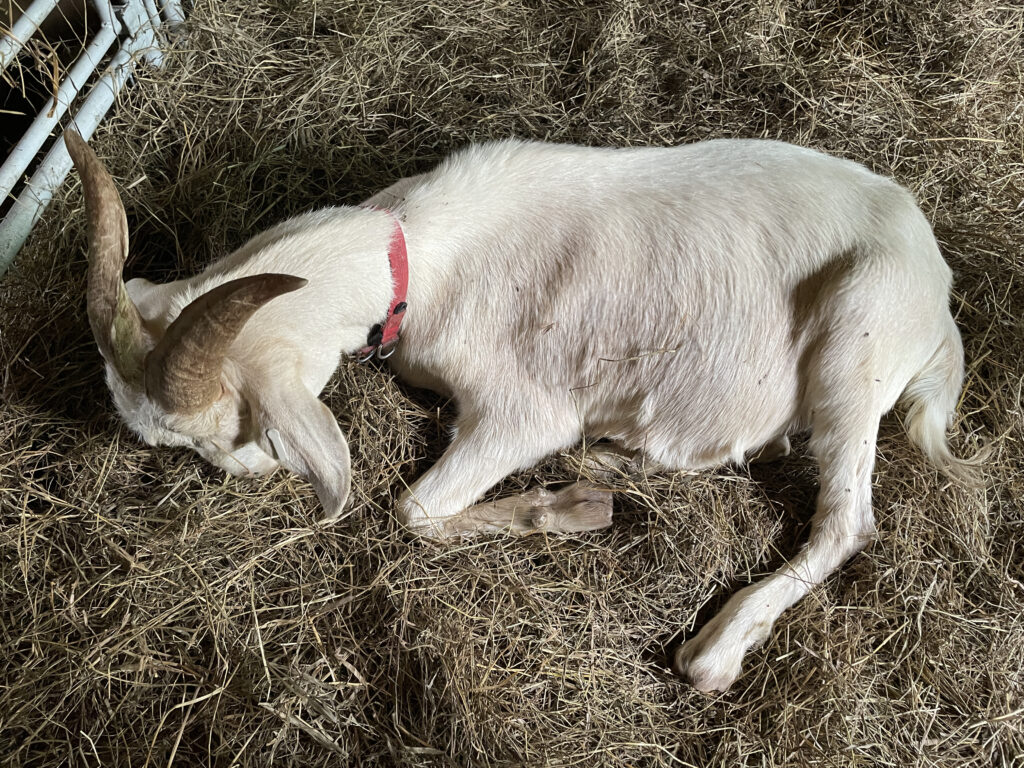
Nope. Goats are prey animals, which means they’re experts at hiding illness until it’s serious. Your job as a goat wrangler is to notice the little red flags before things get critical.
The Subtle Signs of a Sick Goat
1. They’re Not Eating or Chewing Cud
A healthy goat is basically a furry vacuum cleaner. If they’re not eating, something is wrong. No cud-chewing = no good.
2. Isolation
Goats are herd animals. If one suddenly hangs back, avoids the group, or looks “off,” pay attention.
3. Unusual Poop
Yes, you will become a poop inspector. Normal = firm little pellets. Diarrhea or clumpy poop = trouble brewing.
Just a note on clumpy poops… sudden changes in feed, for example, can cause clumpy poops. When I see them, and there are no other symptoms, I take note and see if they persist. Often times by the next day things are normal. If they continue, then it may be something that needs to be addressed. Runny poops, on the other hand, definitely means something is off.
4. Droopy Ears or Dull Eyes
Bright eyes and perky ears = healthy goat. Droopy, dull, or half-closed eyes = warning sign.
5. Weight Loss or Bloating
Visible ribs, sudden pot belly, or a goat that just “doesn’t look right” can mean parasites or digestive issues.
Simple At-Home Checks
- Temperature: Normal is 101.5°F–103.5°F. Anything outside that range = call the vet.
- FAMACHA Score: Check eyelid color for anemia (pale = worm overload).
- Hydration: Pinch the skin at the neck. If it stays tented, your goat is dehydrated.
What to Do if You Suspect a Problem
- Isolate the goat if possible (to prevent spread and keep a closer eye).
- Check vitals (temp, hydration, eyelids).
- Call your vet — seriously, don’t wait it out. Goats can decline fast.
- Keep notes — what you saw, when it started, what you’ve tried. Your vet will thank you.
Crazy Goat Lady Tip
Trust your gut. You’ll get to know your goats so well that you’ll notice when something feels “off.” Don’t second-guess yourself — a quick call to the vet is always better than waiting and worrying.
Final Thoughts
Healthy goats are active, curious, eating machines. If your goat isn’t acting like their usual nosy, food-obsessed self, something’s up.
The more you watch and learn, the quicker you’ll catch issues — and the better chance you’ll have at turning things around.
Want to stay on top of goat health from day one? Grab my FREE Beginner Goat Owner Checklist here: